SAP for automotive suppliers

SAP for automotive suppliers connects planning, production, logistics, quality, and finance in one integrated environment. It improves predictability, helps meet OEM requirements, and gives teams greater control over complex operations.
SAP for automotive suppliers

Why SAP for automotive suppliers requires a different approach

Automotive suppliers operate in a demanding environment shaped by complex production flows, strict OEM requirements, and constant pressure on quality, cost, and delivery performance. In this context, SAP is more than just a system landscape – it provides the foundation for connected processes, consistent data, and stronger operational control across the business.

A well-designed SAP environment improves visibility across planning, production, logistics, quality, EDI, and finance. It makes it easier to respond to change, reduce operational risk, and support both day-to-day execution and long-term growth.

For automotive suppliers, SAP delivers the greatest value when it connects the operating model end to end. It aligns planning, production, logistics, finance, and compliance in one integrated environment, giving teams the visibility and control they need to meet OEM expectations and manage complexity at scale.
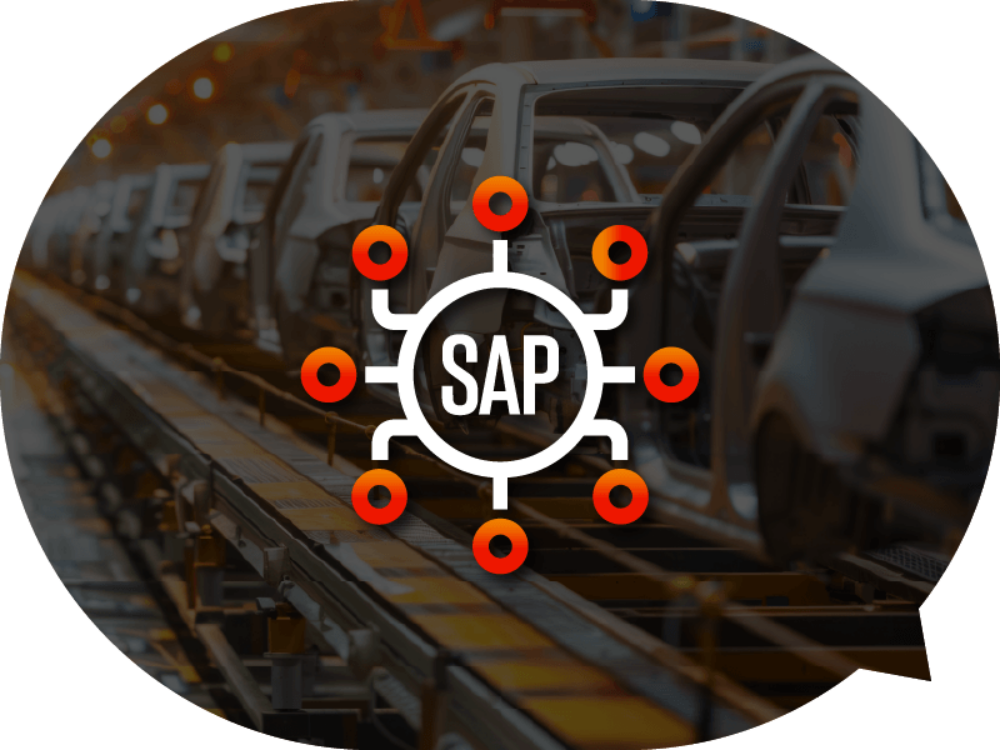

SAP S/4HANA implementations for automotive suppliers

SAP S/4HANA brings core processes together on a single platform, making it easier to manage the business in an increasingly complex environment. For automotive suppliers, this means better control over production, logistics, quality, and finance, as well as more predictable collaboration with OEMs and other customers.

In an environment where demand shifts, reporting requirements continue to grow, and pressure on quality and on-time delivery remains high, SAP S/4HANA supports decision-making based on current, consistent data. This helps reduce the risk of errors, overproduction, downtime, and excess inventory.

What a well-designed SAP S/4HANA implementation delivers:

  • consistent data across production, logistics, quality, and finance,
  • greater operational control and faster response to deviations,
  • better readiness for OEM requirements, including EDI, labeling, traceability, and reporting,
  • the scalability needed for new projects, plants, and organizational change.

In SAP S/4HANA projects for automotive suppliers, we focus on uninterrupted production and deliveries, a phased approach to change, reliable testing of critical processes, and a clear business case tied to measurable operational and financial outcomes.

Want to see how SAP S/4HANA could support your business? Book a consultation or explore what SAP S/4HANA implementation looks like in the automotive industry.

SAP rollouts and process standardization in automotive groups

In international groups, having an ERP system is not enough. What matters is whether processes, data, and operating standards remain consistent across headquarters, subsidiaries, and production plants.

SAP rollouts make it possible to transfer a proven process model to additional locations while maintaining the right balance between group-wide requirements and the realities of each plant, country, or customer. This is especially important in the automotive industry, where process consistency directly affects quality, traceability, reporting, and collaboration with OEMs.

How we deliver SAP rollouts:

  • define or refine the global process and system template,
  • implement it across subsequent locations,
  • adapt the solution to local business and legal requirements,
  • coordinate configuration, testing, training, and go-live,
  • help maintain one consistent SAP model across the entire group.

SAP rollouts help build a consistent process model across multiple plants. They improve group-level reporting and planning, strengthen operational control while preserving local flexibility, and make it easier to maintain consistent quality, EDI, and traceability standards across locations. By reusing a proven template, they also reduce the cost and risk of future rollouts.

Want to plan SAP rollouts across additional plants more effectively or bring greater consistency to the way your group operates? Book a consultation or read the Volvo Construction Equipment case study.

Dedicated SAP applications and extensions for automotive suppliers

Not every operational challenge in the automotive industry requires an SAP extension. In many cases, greater value comes from using the standard more effectively, improving the process, or configuring the system correctly.

SAP extensions make sense when they address a genuine functional gap and make day-to-day work easier for users. That is why we implement them only where they truly support processes, improve usability, and preserve the consistency of the overall architecture.

What you gain:

  • solutions tailored to real operational needs,
  • less manual work and fewer local workarounds,
  • a simpler, more user-friendly SAP environment,
  • system development without unnecessary complexity.

As part of Hicron Software, we build applications and web platforms, and run workshops with users to design solutions that genuinely support business goals.

Do you have a process that standard SAP does not support well enough? Book a consultation and we will help you assess what should be extended and what is better handled within the standard.

E-commerce and marketplaces integrated with SAP

If you sell spare parts, e-commerce should not sit outside SAP as a separate layer. It should be a natural extension of SAP, built on the same core data covering pricing, inventory, availability, product compatibility, and delivery times.

In automotive, customers need to find the right part quickly and trust that the information is accurate and up to date. That is why we design solutions in which online sales are tightly integrated with core business processes and SAP data.

How we support automotive companies in e-commerce:

  • select the right platform for the scale of the business and the sales model,
  • design SAP integration with performance and security in mind,
  • ensure consistency of product and commercial data,
  • simplify the search and ordering process for the right parts,
  • audit the current solution on request and recommend directions for further development.

We combine SAP and e-commerce expertise, so one partner is accountable for both the SAP layer and the online sales environment. This reduces the risk of disconnects between vendors and makes future development easier.

Want to grow online spare parts sales through SAP-integrated e-commerce? Book a consultation and we will help you choose a model that fits your processes and the scale of your business.

SAP application support for automotive suppliers

In automotive, SAP is a mission-critical system that supports operational continuity. That is why application support must do more than respond to tickets. It should also stabilize the environment, reduce the risk of downtime, and enable the system to evolve in line with changing business needs.

Our AMS team supports automotive organizations both in day-to-day SAP operations and in more complex changes related to system development, rollouts, or preparation for SAP S/4HANA.

Scope of SAP application support

  • handling incidents and user requests in line with the agreed SLA,
  • system development and implementation of changes,
  • support for on-premise and SAP Cloud environments,
  • cooperation with SAP, risk management, and administrative support,
  • support for transformation projects, rollouts, and S/4HANA initiatives.

By working with us, you gain access to nearly 100 specialized SAP consultants, a flexible support setup tailored to the scale of your organization, and nearshore capabilities in the same time zone, with support available in Polish, English, and German.

Want to reduce the risk of downtime and strengthen your SAP support model? Book a consultation and we will help you choose an AMS model tailored to your production environment.

Why Hicron

A transformation partner, not just an IT vendor
We deliver transformation projects for organizations that view ERP in the context of strategy, not just system replacement. We help translate business goals into clear decisions about processes and SAP architecture. As a result, the system becomes a practical driver of growth and efficiency.
Deep understanding of production rhythms and OEM requirements
We work every day with companies operating in JIT and JIS environments, where deadlines are tight and quality requirements are high. We support not only parts manufacturers, but also OEMs, importers, and major dealer networks, which gives us a broad understanding of the automotive ecosystem. We understand what day-to-day plant operations look like – and what downtime, delivery errors, traceability issues, or data exchange failures can mean in practice. This allows us to move quickly into discussions about real operational and financial challenges and ground our proposed solutions in business reality.
Nearshore delivery that simplifies day-to-day collaboration
We operate in a nearshore model, within the same or a similar time zone and business culture. This makes day-to-day communication easier, shortens response times, and reduces the risk of misunderstandings common in offshore setups. When needed, we can quickly be on-site and work through key decisions or project stages together with your teams. The result is greater predictability and a stronger sense of control.
Global experience, local accountability
We deliver projects worldwide for organizations with plants in multiple countries and different production models. This allows us to design solutions that scale across locations while taking local conditions into account and preserving consistency in processes and group-level reporting. We combine a global perspective with local accountability for delivery and day-to-day collaboration.
Focused on business outcomes
We do not treat SAP implementations as purely technical projects. We analyze the client’s business model, market environment, OEM relationships, and growth plans, and use that understanding to recommend the right architecture, scope, and pace of change. We see go-live as an important milestone, not an end in itself. What matters is visible operational and financial impact: greater predictability, higher efficiency, lower error-related costs, and more stable customer relationships.

Industry projects

Global automotive components supplier – stable collaboration with OEMs across four continents

For a Maflow Group company with eleven production plants across Europe, Asia, and the Americas, we implemented SAP solutions that improved production management and communication with global customers. The outcome included faster access to key data and quicker response times to OEM requirements.

Hicron completed all the contracted works at lightning speed, which was a pleasant surprise. Professional delivery of this essential functionality was extremely important to us.

Bartłomiej Irczyk
IT Director at Maflow Group
Automotive coatings manufacturer – fewer errors, smoother work

For NOVOL, a market leader in automotive refinishing materials, we expanded SAP in logistics-related areas. The implemented solutions helped reduce the risk of errors and shorten process handling times, which translated into higher satisfaction among both users and customers.

During the three years of cooperation in the development of the SAP system, Hicron consultants more than once proved their competence and understanding of our business, especially in the area of logistics. That is why we decided to entrust Hicron with the task of preparing and implementing the variant configurator. The work on the solution went very smoothly, according to our expectations. Saving time, minimizing the possibility of errors, and increasing the comfort of work are the main benefits that we gained thanks to the implementation.

Tomasz Włodarczak
HEAD OF THE IT DIVISION AT NOVOL

FAQ

Do we need to replace all systems with SAP S/4HANA right away? Not always. We often start with key plants or selected areas, such as production or logistics, and then extend the solution across the organization over time. What matters most is having a clear direction and a consistent roadmap from the beginning.
Is a phased rollout approach across the group possible? Yes. Rollouts are usually planned in phases – by plant, country, or business line. This helps reduce risk, manage change more effectively, and build on lessons learned in the first locations.
How do you reduce the risk of production downtime during ERP implementations? We use process testing in conditions close to production reality, pilot phases, and a staged rollout approach. Key scenarios, such as deliveries to OEMs, are refined and tested before go-live, and the cutover window is planned to minimize disruption to ongoing production.
What if we already have other systems such as MES, WMS, or local solutions? We treat ERP as part of a broader architecture. We analyze existing systems, their role, and data quality, and then design integrations or gradual consolidation in a way that preserves what works and avoids duplicate functionality.
Do you work only with large corporate groups? No. We work with both global organizations and mid-sized companies that supply parts to OEMs or operate in the aftermarket. The scope and delivery model are tailored to the scale of the business and the maturity of its processes.
Where should we start if we do not yet have a clear ERP roadmap? We usually begin with a short workshop or an initial assessment. We structure business goals, key challenges, and the current system landscape, and then propose possible scenarios with priorities and next steps.

Contact Us

Contact Automotive Experts

No matter whether you’re planning a transformation of your Automotive business or looking for small improvements – our Automotive experts are right here to find the perfect SAP solutions to help you reach to business goals. 
Remek Automotive offer

This site use cookies. By continuing to use this website, you agree to our Privacy Policy.

OK, I agree